
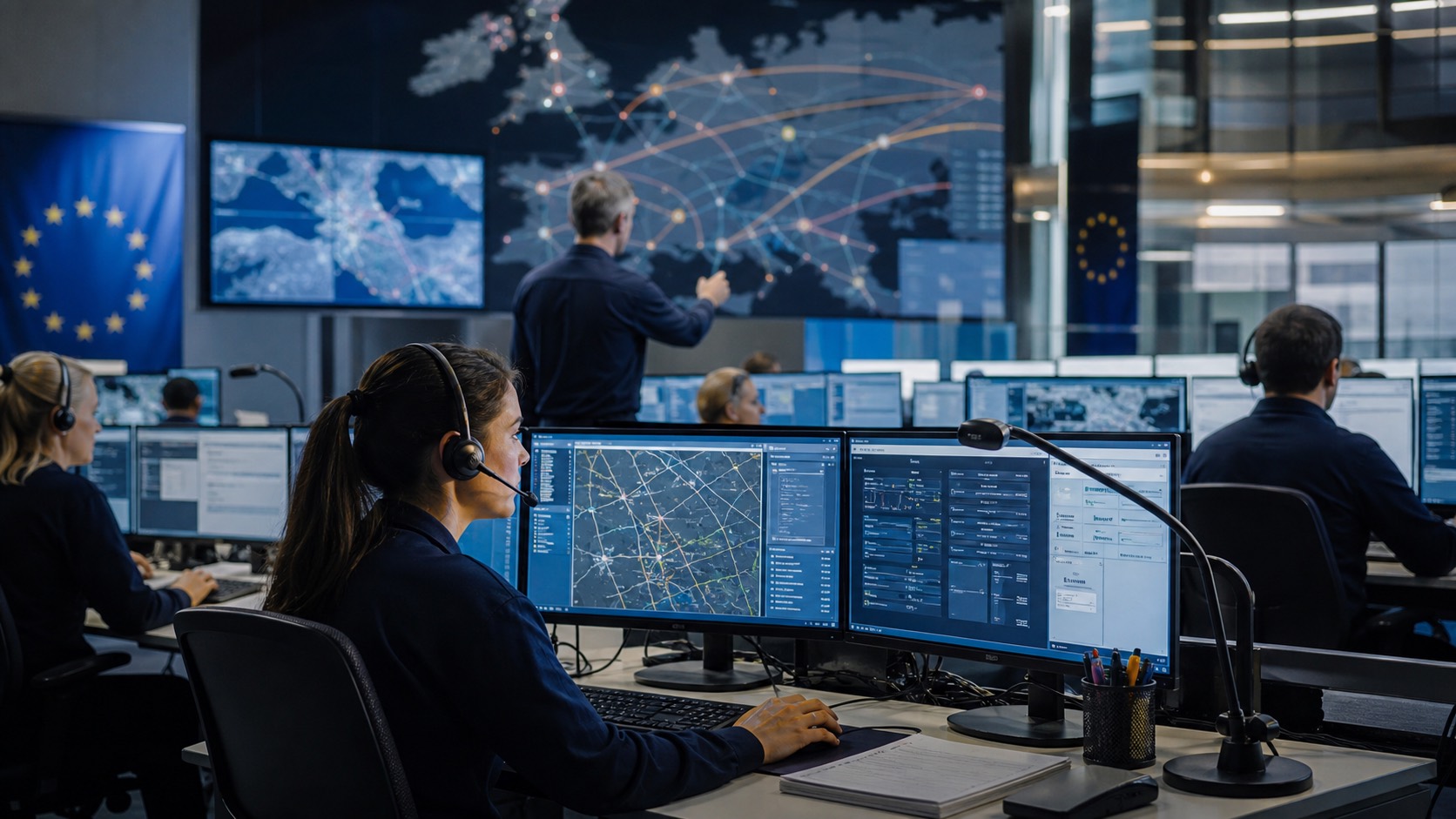
Emergency communications has two conversations that too often run in parallel. One is about how citizens reach emergency services: 112, NG112, accessibility, caller location, eCall, apps, VoIP providers, and PSAP routing. The other is about how responders communicate with each other: mission-critical push-to-talk, data, video, public safety broadband, control rooms, and field operations.
In a real incident, those two worlds meet.
A caller reaches the emergency chain. A call taker gathers information. Dispatch sends responders. Responders need reliable communications, situational awareness, and coordination. If one half of that chain modernises without the other, the public-safety benefit is limited.
Why shared resilience matters
NG112 can improve the information that reaches a PSAP. Critical communications can improve the information that moves among responders. But both depend on resilience assumptions that should be explicit.
A national emergency communications strategy should ask:
- Which networks are expected to operate during power loss, congestion, or disaster conditions?
- Which services have priority, pre-emption, or hardened access?
- How are failures communicated between PSAPs, operators, and responder networks?
- Can location and incident context move from the citizen-facing side into responder workflows?
- Are backup procedures tested across both environments?
- Do exercises include both call intake and field communications?
The uncomfortable truth is that a technically successful 112 call is only the beginning. The response still has to be coordinated.
What ETSI Plugtests suggest
ETSI's 2026 mission-critical Plugtests reported a high interoperability success rate across MCPTT, MCData, and MCVideo scenarios. That is not an NG112 result, but it is relevant. It shows the same pattern emergency communications teams keep seeing: multi-vendor public-safety systems need repeated interoperability testing.
The NG112 side has a similar lesson from Plugtests work around location, routing, real-time text, video, recording, logging, and NG eCall. Different domain, same discipline.
The strategic takeaway is simple:
- Do not assume standards compliance equals operational interoperability.
- Do not test voice separately from data, video, location, and logs.
- Do not leave failover and degraded-mode behavior until late acceptance.
- Do not buy isolated systems without requiring evidence of boundary behavior.
Public safety is a system-of-systems problem.
The role of operators and providers
Mobile operators, fixed operators, VoIP providers, cloud communications platforms, and critical communications suppliers all sit somewhere in the emergency chain. Each may see only its own service boundary, but incidents do not respect those boundaries.
Provider assurance should include:
- Emergency call routing and location performance.
- Public safety broadband continuity assumptions.
- Roaming behavior and cross-border access.
- Priority handling where applicable.
- Operational contact paths between providers and emergency authorities.
- Evidence from tests, incidents, and post-change validation.
For enterprises, the lesson is narrower but still important. If a workplace emergency call originates from Teams, a cloud PBX, or a VoIP service, the organisation should understand how that provider chain interacts with national emergency services. A glossy voice migration project is not complete until emergency behavior is tested and documented.
Bringing the two lanes together
Public authorities do not need to merge every programme office. But they do need a shared resilience model.
A useful joint review might include:
- 112/NG112 programme leaders.
- PSAP operations teams.
- Mobile network operators.
- VoIP and enterprise provider representatives.
- Critical communications programme owners.
- Cybersecurity and incident-response leads.
- Accessibility and public-warning owners.
The agenda should be practical: map dependencies, define failure modes, test the most dangerous assumptions, and agree who owns each unresolved risk.
Editorial perspective
The public does not experience emergency communications as separate procurement lots. They experience one chain: call for help, explain the problem, get responders moving, and trust that responders can coordinate.
NG112 makes the first half of that chain richer. Critical communications modernisation makes the second half stronger. The work now is to make sure those improvements meet in the middle.